

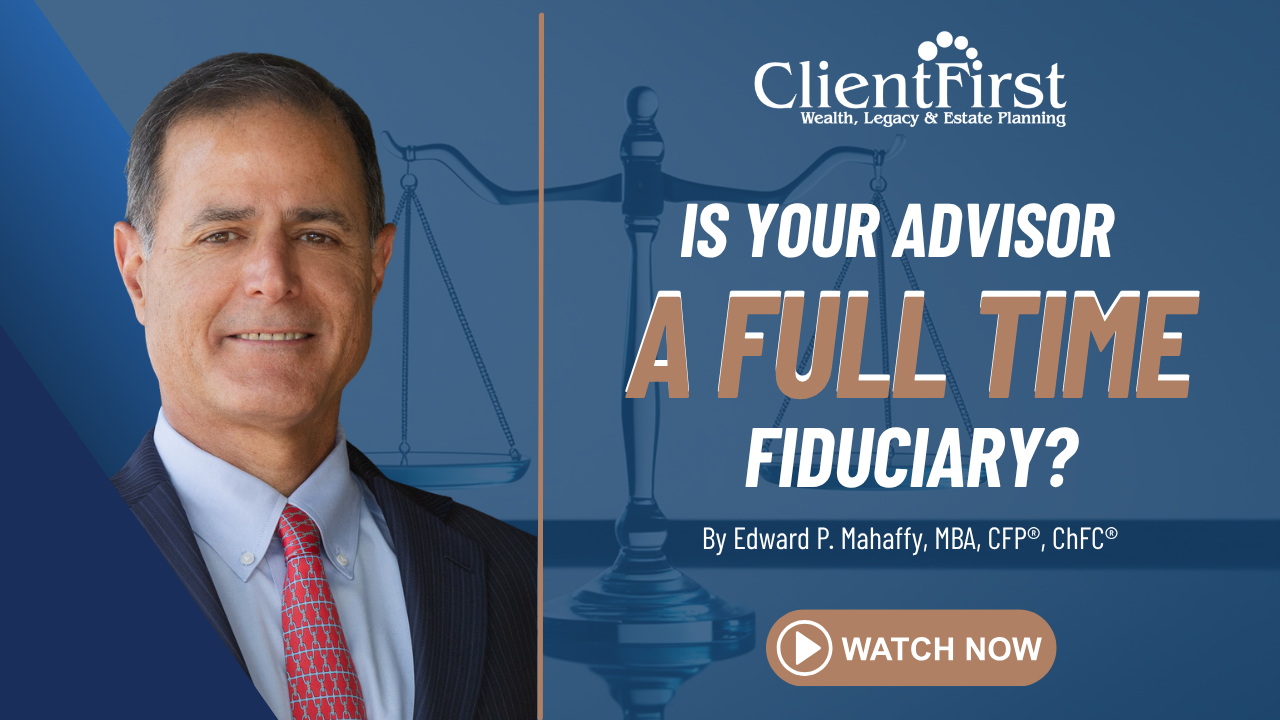
Is Your Advisor a Full Time Fiduciary?
Welcome to Wealth Defense 101, the first video in a series designed to help you safeguard your financial future. Just like in self-defense, the first step is situational awareness—and that starts with understanding whether your financial advisor is truly acting in your best interest.
In this video, Ed Mahaffy explains the critical difference between full-time fiduciaries and hybrid advisors, and why it matters for your retirement planning. Many investors don’t realize that some advisors can switch between acting as a fiduciary and acting as a salesperson, creating potential conflicts of interest.
You’ll learn a simple, powerful question you can ask your advisor to determine if they are legally obligated to act in your best interest 100% of the time. This knowledge can help you make more informed decisions and avoid costly mistakes.
If you found this helpful, like, share, and subscribe for more insights.
Get your free copy of Ed’s book:How to Select a Financial Advisor, The Least You Should Know
Transcript
What Is Wealth Defense 101?
Welcome to Wealth Defense 101, the first of a series. The first thing we learn in a self-defense class is situational awareness, and I submit to you the same is true about wealth defense.
Why Fiduciary Awareness Matters
Let me ask you a question. Do you know whether your advisor is a full-time fiduciary? Did you know that there was such a thing as a part-time fiduciary? I’ll show you the easy way to find out.
Understanding Conflicts of Interest
Let’s imagine your doctor walks into the room and says, “By the way, sometimes I act in your best interest, and sometimes, in addition to my usual fee, I recommend treatment which may be very lucrative for me, even though it may not be the best option for you.” Would you stay with that doctor?
What Is a Hybrid Advisor?
Many advisors are licensed as both an advisor as well as a broker and are not held to the fiduciary legal standard whenever recommending products. This is a hybrid compensation model where the advisor is compensated by advisory fees as well as commissions, which may present conflicts of interest.
Meet Ed Mahaffy
If I’ve not met you yet, I’m Ed Mahaffy. I’ve been helping clients retire for 30 years. My team and I have a fee-only retirement planning firm.
The Problem With “Two Hats”
Hybrid advisors wear two hats. The problem is you may not know which hat they happen to be wearing at any given time—the fiduciary hat or the broker salesperson hat. The conversation may sound the same. The relationship may feel the same, but behind the scenes, incentives can completely change, and nobody blows a whistle to alert you.
How to Know If Your Advisor Is a Fiduciary
The good news is there’s an easy way to determine whether you are receiving fiduciary advice at any given time. Require a written response to the following question:
“Are you legally required to act as a fiduciary 100% of the time?”
Why You Should Never Have to Guess
This is the easiest way I can think of to determine whether or not you are working with a full-time fiduciary, because you should never have to guess whether your advisor is acting in your best interest.
Next Steps
If you found this video helpful, please like, share, or subscribe, and if you would like a free second opinion or a free copy of my book, please click the link below: